Thursday, December 31, 2009
Rotten to the Core
Well, I thought that my Apple computer was fixed when the Genius tech removed a faulty RAM module before Christmas, but when I took it back into the store to have the replacement installed, it crashed again. They ran a diagnostic, and based on that, they just gave up and replaced my hard drive. The model I had was no longer available, so they gave me a free upgrade to a more powerful drive and sent me home. All of this happened right before the holiday break, so I have not had a chance to fire it up again and re-do all of my settings and make sure it's back on the right track, but I plan to do that this weekend. I have to say, it's really been getting me down. I invested a lot in this computer, and it's a been a huge holdup for me this past year. I hope this solved the problem. The Apple techs were very kind, and have been awesome about addressing my concerns, it's just been awful to have so many things go wrong with what is supposed to be such a good machine.


Tuesday, December 1, 2009
Book By Its Cover
This year has seemed to be one of delay and disruption. I shared below how my computer has been giving me fits, and so has the economy. There have also been some personal things that have required quite a bit of processing on my part to come to terms with. I've taken some of the slow time to get mundane parts of my life in order, but I feel like the hour is approaching for me to move forward with my creative projects again. My first book is about ready to go as an e-book, but I've had a holdup with the cover artwork, because my artist friend who is doing it for me has recently had a quite serious illness. I am hoping he recovers soon because he's been through a lot the last few years and truly does not deserve this. I think his state has come mostly from stress due to unpleasant stuff he has had to deal with, which amounts to being unfairly punished for being unfairly punished. I can relate to that, it's certainly happened to me in the past, but I feel very sorry for him because he's sick enough to have taken disability time off from his day job and I know he feels physically awful. I am sharing this because I write this blog to share my experiences with developing my writing, and this kind of thing is part of the process. Reality is something that must be dealt with.
More Scribd
I've gotten about one thousand hits on Scribd since I posted a sample of The Flower of Knighthood there, so I'd say it's definitely a success. I want to write some essays and put them up there as well to generate more traffic.
Poisoned Apple
I wrote on here back in February how I finally was able to buy an Apple computer after months of saving. Alas, I have been having problems with it ever since, issues which escalated recently. It's been giving me one kernel panic after another, a state where the operating system is not communicating with the requested application and the machine freezes and shuts down. I took it to the Apple Genius Bar twice over the summer, and they could not find anything wrong with it because, as often happens, it not do exactly its same breakdown for them as it did for me at home. I then went online and researched the failure and its possible causes, and went so far as to erase the OS and reinstall it from scratch. I thought that had fixed the bad seed, but this weekend it failed more spectacularly than ever, so I took it in again. It finally did its screaming, seizing collapse in full glory for the tech, who realized it must have a faulty RAM module. He removed half its brain (one chip) to check, and it instantly worked better. It's still under warranty, so he ordered a replacement at no charge and told me it should be here in a week or so. It's operational even with one good chip, and it's working better than it has in months. I am very pleased, because I thought my Apple was a lemon and feared that I would have to return it. I was so happy to get it, and it's been so frustrating to me to have it be such a problem when it was supposed to solve problems. I've been stalled out on developing my music because of it and the drain on me from trying to fix it has slowed me down on my editing and writing, too, but hopefully now it can live up to its promise. I think my Apple has been expressing a metaphysical problem as well as a technical one - I've also written some about crossing Da'ath, the Abyss, in the Tree of Life over the last few months, and in the very center of the primal waste stands the Tree of the Knowledge of Good and Evil, with a serpent coiled around its base. Maybe I had to get past the poison of the snake in order to be able to apply the wisdom of the Apple. The doorway to the Qliphoth, the reverse Tree of Life, is in the Abyss as well, and makes its influence known through brokenness and corruption, often of a psychological nature. My RAM module, clearly a symbol of thought and memory, was corrupt, but through serious effort towards systems integrity it is in the process of being repaired. It's like a redemption of the Fall enacted in cyberspace, which is not a bad metaphor for the archetypal realm from which this process of spiritual initiation originates.
The Holy Grail

"How at the Castle of Corbin a Maiden Bare in the Sangreal and Foretold the Achievements of Galahad" by Arthur Rackham. From Alfred Pollard's The Romance of King Arthur and His Knights of the Round Table (1917).
Monday, October 12, 2009
Shadowlands
I have been watching a great many movies lately. I've been somewhat tired, and kind of took the summer off to catch up with myself. I live near a library and on the weekends I've been checking out mostly older films on VHS. There's not much competition for them, so I've gotten some really good titles. Last night I continued my C.S Lewis multimedia kick, watching Shadowlands, the 1993 film starring Anthony Hopkins as Lewis and Debra Winger as Joy Gresham, nee Davidman, the American poet who became his wife. Gresham was a great admirer of Lewis' work, and in turn she inspired his books Surprised by Joy and A Grief Observed. If you are not familiar with their story, you can infer some of its arc from those two titles. A native New Yorker, Gresham corresponded with Lewis from America when she was still married to alcoholic writer William Lindsay Gresham. Unhappy in that marriage, she took her two sons, David and Douglas (only Douglas is mentioned in the film) to London and went to Oxford to meet Lewis. The two became friends, and when she finally left her husband and settled in England, she approached Lewis with an unusual request - she asked if he would marry her in a platonic civil union so she could remain in the country. He obliged and they lived separate lives until she was stricken with bone cancer. Lewis realized that his own lectures characterizing pain as a call from God to spiritual awakening had come to life, and that he loved Joy. The feeling was mutual, and they married again with an Episcopal priest presiding at her hospital bed. Gresham eventually died in 1960 after a long struggle with the disease, but by all accounts her marriage to Lewis was a happy one. It's been remarked upon how surprising the couple's eventual romance and marriage was, but Lewis was an unconventional man in many ways. He wrote science-fiction and childrens' stories, and also penned populist theology such as The Screwtape Letters, all of which were considered somewhat suspect for a man of his academic accomplishments (don of Medieval and Renaissance Literature at both Oxford and Cambridge). There is a scene early in the film in a local pub where his professor friends are ribbing him about his Narnia books, trying to find Freudian overtones to the wardrobe and fur coats, but Lewis stands up and enacts the scene of pushing through to a new world and describes it as simply "magical." His point is not understood, as the other men are highly invested in intellectualism and rationalism and can't make the imaginative leap to follow him in the snowy footsteps of a faun. Gresham was different. Herself a poet with an imaginative sensibility, she was a prodigy of intellect. She attended Hunter College at the age of fourteen and was published in the prestigious Poetry Magazine by the time she attained her majority. Her family were Russian Jews from the Bronx, although Gresham herself converted to Christianity at least partly on the basis of Lewis' theological writings. She was outspoken and intelligent and I think Lewis liked her simply because she was an equal in her own right who could keep up with him. I have to say I admire him for marrying a strong woman. It cements my positive image of his character that he could hold his own enough to choose a wife who could challenge him.
There is also a strange kind of symmetry to each of the major relationships with women that Lewis had in his lifetime. Lewis's mother died of cancer when he was a boy, which devastated him. In the film, he says his world ended, which is a very fair statement to describe what happened to him in real life. His father did not deal well with the event, and the boys were shipped off to boarding school. It's no wonder they spent most of their lives in company with each other - each was pretty much the other one's only emotional support after their mother passed away. Lewis' brother Warnie had his own struggles with alcoholism, and the men shared a house together for years, exactly as depicted in the film. What isn't covered in the movie is the earlier relationship Lewis had with the mother of a friend. Paddy Moore was a co-cadet with Lewis in WWI and the two agreed that if either died, the survivor would help the other's family. Moore was killed in action, and Lewis, though only eighteen years old, made good on his word. Mrs. Moore was forty-five when they became acquainted, and they lived together until the 1940's when ill health forced her into care. He never elaborated on whether their relationship had a romantic dimension, but he loved her deeply and referred to their interaction as complex. She filled many aspects of the maternal role for him, but also looked up to him as a man, and a stand-up one who had been willing to set aside some of his own needs to help her. As to Gresham, she was already a mother of two sons when Lewis met her, and that had to be appealing to him, echoing the dynamic of his own family with himself and Warnie as the earlier template. He disavows Freudian implications in the film, but the psychological subtext is undeniable. As someone who lost a parent in childhood, I can testify through personal experience that one finds oneself seeking ways to compensate for that loss through later relationships. There is no harm in that, emotional needs exist to be fulfilled, and Lewis' relationship with Gresham seems to have been very fulfilling for him. I read A Grief Observed and while I found it hard to take in some ways due to its personal nature and the dark emotions it describes, it's very clear from the text that Lewis deeply loved his wife and missed her terribly after she was gone. He wrote the book anonymously, but finally had to come out publicly as its author when many of his own friends kept recommending it to him as a tool to deal with his feelings, surely an irony for a private man. He took good care of Joy's sons after she died and named them as his heirs, with all rights to his works - just imagine inheriting Narnia.
I do have to say that I had a few issues with the film. I had wanted to see it because I like Lewis so much, and I am glad that I did, but I thought there were some major gaps in the story which made it somewhat jarring for me. The absence of Joy's son David is one of the main ones. The fact that she had two sons was for me of paramount symbolic importance, since Lewis was also one of a pair of brothers. Perhaps David did not want to be in the film. I have not found any explanation for his absence in any of the related material online, but he was written into an earlier stage version of Shadowlands, so it does seem odd to me that he was taken out of the more high-profile film project. I also felt that the screenplay did not quite do justice to the story. There were several instances where the action was inadequately explained. In one scene at Oxford after their marriage of convenience and just before her cancer diagnosis, Lewis and Gresham are in his college rooms, and she suddenly verbally attacks him for arranging a closed-off life for himself where he always holds the upper hand. She stops one sentence short of calling him abusive, and storms out. He is left utterly confused, with a teakettle whistling in the background that I felt was emblematic of their heated emotions and especially so of her venting. Only one or two scenes later, he is shown calling her, and she falls with a snapped femur on the way to catch the phone, setting the stage for the revelation of her advanced cancer. There isn't adequate explanation, for me at least, of why he even called her. She had been downright rude, almost to the point of being psychologically dysfunctional, and he himself said in hurt surprise, "I thought we were friends." There isn't enough build-up to that scene, and there isn't enough follow-through, either. It is supposed to be one in a continuum of vignettes that shows how Lewis shut down emotionally after his mother's death and never opened himself up to pain again, even though he somewhat hypocritically prescribed its tonic to others in his talks on religion. I felt that that plot point was handled awkardly, however, with this scene as the most egregious example. Her accusation comes out of nowhere, and goes nowhere. As soon as she is sick, it's just forgotten. In a film about two writers, I found several similar lacking elements in the screenwriting. It isn't quite balanced, spending too much time in some places and not enough in others. And as odd as David's absence is, there is a young student of Lewis' that seems to have wandered into the movie for little reason. He's struggling with his classes, and with Britain's class divisions, a poor boy who falls asleep in school and doesn't complete his lessons because he stays up all night reading preferred volumes he has stolen from the local bookseller. He's contrarian, refusing Lewis' help and eventually drops out during his third year but later becomes a teacher. I think he is supposed to be another maverick who bucks Lewis's control, but I found his character grating and superfluous. I am not sure if he was based on someone from real life or was merely added for dramatic tension, but I considered him a distraction whose sacrifice would have strenghened the film. One strong-willed and obstreperous foil is enough, even for C.S. Lewis. Shadowlands was directed by Sir Richard Attenborough, and it is lovely to look at. Oxford is a naturally photogenic setting and the period look of the early 1950's is masterfully achieved. The film proceeds at a stately pace, but there simply isn't enough explanation and development in its content for my taste. Anthony Hopkins and Debra Winger are both well-cast for their roles, they certainly look right and perform admirably, but I never felt any chemistry between them, a serious failing for a film based on romance. As fulfilling as this relationship was in real life, I simply found the movie unsatisfying. Other people have loved it and raved about it to me, but I think I just prefer the real-life story to the Hollywood version. As the takeaway of that, here is a very cute picture of the pair hanging out at his house in Oxford - they do look really happy, don't they?: http://www.aslanbooks.com/images/CSJoylewis.jpg
There is also a strange kind of symmetry to each of the major relationships with women that Lewis had in his lifetime. Lewis's mother died of cancer when he was a boy, which devastated him. In the film, he says his world ended, which is a very fair statement to describe what happened to him in real life. His father did not deal well with the event, and the boys were shipped off to boarding school. It's no wonder they spent most of their lives in company with each other - each was pretty much the other one's only emotional support after their mother passed away. Lewis' brother Warnie had his own struggles with alcoholism, and the men shared a house together for years, exactly as depicted in the film. What isn't covered in the movie is the earlier relationship Lewis had with the mother of a friend. Paddy Moore was a co-cadet with Lewis in WWI and the two agreed that if either died, the survivor would help the other's family. Moore was killed in action, and Lewis, though only eighteen years old, made good on his word. Mrs. Moore was forty-five when they became acquainted, and they lived together until the 1940's when ill health forced her into care. He never elaborated on whether their relationship had a romantic dimension, but he loved her deeply and referred to their interaction as complex. She filled many aspects of the maternal role for him, but also looked up to him as a man, and a stand-up one who had been willing to set aside some of his own needs to help her. As to Gresham, she was already a mother of two sons when Lewis met her, and that had to be appealing to him, echoing the dynamic of his own family with himself and Warnie as the earlier template. He disavows Freudian implications in the film, but the psychological subtext is undeniable. As someone who lost a parent in childhood, I can testify through personal experience that one finds oneself seeking ways to compensate for that loss through later relationships. There is no harm in that, emotional needs exist to be fulfilled, and Lewis' relationship with Gresham seems to have been very fulfilling for him. I read A Grief Observed and while I found it hard to take in some ways due to its personal nature and the dark emotions it describes, it's very clear from the text that Lewis deeply loved his wife and missed her terribly after she was gone. He wrote the book anonymously, but finally had to come out publicly as its author when many of his own friends kept recommending it to him as a tool to deal with his feelings, surely an irony for a private man. He took good care of Joy's sons after she died and named them as his heirs, with all rights to his works - just imagine inheriting Narnia.
I do have to say that I had a few issues with the film. I had wanted to see it because I like Lewis so much, and I am glad that I did, but I thought there were some major gaps in the story which made it somewhat jarring for me. The absence of Joy's son David is one of the main ones. The fact that she had two sons was for me of paramount symbolic importance, since Lewis was also one of a pair of brothers. Perhaps David did not want to be in the film. I have not found any explanation for his absence in any of the related material online, but he was written into an earlier stage version of Shadowlands, so it does seem odd to me that he was taken out of the more high-profile film project. I also felt that the screenplay did not quite do justice to the story. There were several instances where the action was inadequately explained. In one scene at Oxford after their marriage of convenience and just before her cancer diagnosis, Lewis and Gresham are in his college rooms, and she suddenly verbally attacks him for arranging a closed-off life for himself where he always holds the upper hand. She stops one sentence short of calling him abusive, and storms out. He is left utterly confused, with a teakettle whistling in the background that I felt was emblematic of their heated emotions and especially so of her venting. Only one or two scenes later, he is shown calling her, and she falls with a snapped femur on the way to catch the phone, setting the stage for the revelation of her advanced cancer. There isn't adequate explanation, for me at least, of why he even called her. She had been downright rude, almost to the point of being psychologically dysfunctional, and he himself said in hurt surprise, "I thought we were friends." There isn't enough build-up to that scene, and there isn't enough follow-through, either. It is supposed to be one in a continuum of vignettes that shows how Lewis shut down emotionally after his mother's death and never opened himself up to pain again, even though he somewhat hypocritically prescribed its tonic to others in his talks on religion. I felt that that plot point was handled awkardly, however, with this scene as the most egregious example. Her accusation comes out of nowhere, and goes nowhere. As soon as she is sick, it's just forgotten. In a film about two writers, I found several similar lacking elements in the screenwriting. It isn't quite balanced, spending too much time in some places and not enough in others. And as odd as David's absence is, there is a young student of Lewis' that seems to have wandered into the movie for little reason. He's struggling with his classes, and with Britain's class divisions, a poor boy who falls asleep in school and doesn't complete his lessons because he stays up all night reading preferred volumes he has stolen from the local bookseller. He's contrarian, refusing Lewis' help and eventually drops out during his third year but later becomes a teacher. I think he is supposed to be another maverick who bucks Lewis's control, but I found his character grating and superfluous. I am not sure if he was based on someone from real life or was merely added for dramatic tension, but I considered him a distraction whose sacrifice would have strenghened the film. One strong-willed and obstreperous foil is enough, even for C.S. Lewis. Shadowlands was directed by Sir Richard Attenborough, and it is lovely to look at. Oxford is a naturally photogenic setting and the period look of the early 1950's is masterfully achieved. The film proceeds at a stately pace, but there simply isn't enough explanation and development in its content for my taste. Anthony Hopkins and Debra Winger are both well-cast for their roles, they certainly look right and perform admirably, but I never felt any chemistry between them, a serious failing for a film based on romance. As fulfilling as this relationship was in real life, I simply found the movie unsatisfying. Other people have loved it and raved about it to me, but I think I just prefer the real-life story to the Hollywood version. As the takeaway of that, here is a very cute picture of the pair hanging out at his house in Oxford - they do look really happy, don't they?: http://www.aslanbooks.com/images/CSJoylewis.jpg
Tuesday, September 29, 2009
Mindwalk With Me
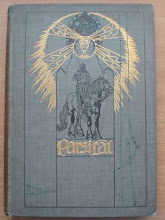
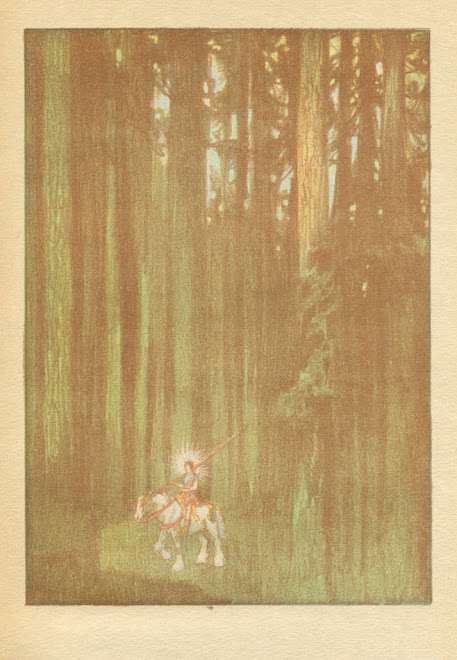
I just watched the movie Mindwalk, released in 1990 on VHS. It's never been reissued on DVD to my knowledge and I finally tracked it down on EBay at a price I was willing to pay. It's kind of a cult hit, especially among Mensa types, and copies can go for as much as $100, but I found one for $20 and snapped it up. I've been wanting to see it for a while, especially since I went to Mont St. Michel last summer - except for one brief scene at the beginning, the entire film was shot on location there. It's a deceptively simple film, almost more like a play, featuring a rambling conversation between a female Norwegian physicist (Liv Ullmann), an expat American poet/actor/playwright living in Paris (John Heard) and an American Senator and recently defeated presidential candidate (Sam Waterston). I was amazed at how timely the topics were, with the dialogue including commentary on global warming, international economic issues and sustainability, all of which have grown even more critical since the film was made almost two decades ago. The movie opens with Waterston calling Heard in the aftermath of the election and asking if he can visit the poet, his speechwriter in past years, in France, with the ulterior motive of recruiting him to rejoin the politician's staff. The men drive up to the cathedral and meet the physicist there, their mutual introduction setting off a two-hour discourse of ideas. Ullman's scientist is the voice of conscience and holistic consciousness and speaks passionately about the importance of ecology and ethics in human affairs. Waterston and Heard listen to her with a growing respect throughout a walk that weaves from the high gothic cathedral of St. Michael to the beach above the mudflats of the Bay of Normandy which surround the holy isle. The central premise of the film, whose script is based on the book The Turning Point by Fritjof Capra, is that Cartesian rationalism had its place in its era as a philosophical catalyst which made possible a new perceptual model of the world, and that that model served to bring humanity into the modern age. However, as the physicist articulates, that model has now worn out and needs to be replaced by a newer one, because its mechanistic approach is too reductive for the complexity of organic life and the pressing demands of the present day, a time when technological knowledge has outrun wisdom. The scientist maintains that man must make another perceptual paradigm shift in order to accomplish the imagining of the needed model. She's struggling with that on a personal level as well as an abstract one - she is in a crisis of faith and is on a perhaps-permanent Sabbatical from her work, because an X-Ray laser that she invented for medical applications was corrupted into a component in the Star Wars missile defense system. To paraphrase her words, that "blew her mind," and she retreated to the simplicity of the isolated medieval monastery to settle her thoughts and achieve some clarity about her future direction. She and the two men are all in some degree of midlife crisis. Each seems to feel like a failure in one way or another. The poet is published, but not well-known or financially successful (he says he sold 12,000 copies of his poetry book, which impressed me, but, hey, it's a movie) and the Senator, having lost his bid for America's highest public office, is retrenching and figuring out his priorities. The discussions which occur directly between him as the voice of pragmatism and the physicist as that of higher human aspiration are especially effective. She criticizes politicians for their one-track worldview, but he lays out the reality of Washington as a place where you have to pick your battles if you hope to get anything done at all. She admits that she lives in an ivory tower, and he invites her down into the brawl by offering her a job as an advisor to his office. Their interaction, especially the scenes where she tries to explain quantum physics and the subatomic world to him, is like an allegorical meeting of the sacred and the profane. As allegory reached its height of refinement and popularity in the literature of the Middle Ages, using the conceit in the medieval setting of Mont St. Michel is a stroke of genius, a construct which carries a powerful psychological punch. The character of the poet is the foil to the other two and a conduit for their energy. He's a holy fool figure, also a popular medieval construct, who provides reflection and comic relief, drawing off some the tension of their polarized dynamic and defusing it. The politician represents power - he is in a position to hire the other two, and he makes policy for the government that can affect the course of global events. He's a personification of the world, the male realm of privilege and prestige, but there are limits to his power, as his electoral defeat shows, and as demonstrated by his befuddlement in the face of the feminine force of nature who communicates to him the strangeness of the quantum field. To his credit, he at least tries to understand her, perhaps a hopeful sign for a favorable outcome in the real world over the long term. For another medieval comparison, all of the characters remind me of the colorful people in The Canterbury Tales. They drop in, tell their stories, and go on about their business. They are on a pilgrimage of sorts, and we see only the part of their life's journey concerning our tale. The midlife crisis motif in the film is a highly creative symbol for the state of modern man - outgrown of the primitive stage that marked his childhood, the bright and shiny reason he thought would solve his adult problems has fallen short, and he must find a way to reinvent himself and forge a better future for his race. The film ends as suddenly and ambiguously as it began, with no firm decisions made, but with much thought provoked. The last line alludes to the title of the originating book - as he and the poet walk back to the car, the Senator muses to himself that he may have reached some kind of seminal "turning point." I have also been reading a book by C.S. Lewis that synchronistically resonates for me in context with this film. It's called The Discarded Image, and it concerns exactly that medieval model of the world which Descartes' rationalism and Newton's modern science replaced. That model is of especial interest to me, because it's the foundation of the ascent mysticism that I've devoted myself to studying lately (please see my earlier posts on the topic - it's coalescing as the absolute core of my own work and I've gone on about it quite a bit). It placed the Earth at a remove from the rest of the cosmos in a way that is actually kind of bewildering. Lewis described it as making man almost suburban in his geographic relation to the universe. This medieval natural order sets the earth and its environs in the solar system within a series of concentric circles drawn by the orbits of the near astronomical objects. The transit of the moon marks the boundary between the realm of matter delineated by our world and that of spirit, termed the Empyrean and composed of a substance called aether which is quite different from the gross matter of the lower reaches. Aether can best be conceptualized as something approaching primordial light, and its regions are those where God and His angels dwell. The hierarchical structure of these realms is an inversion of how the universe appears to us from our perch on the rocky earth. We seem to be at the crux with the heavens whirling around us, but in actuality we are the ones rotating around the Empyrean, the true cosmic axis (another kind of turning point). One metaphor Lewis gives for this is that of a wheel: if God is at the hub, the point around which the created cosmos spins, then man is at the far rim of the wheel, the edge which whirls the most furiously. We suppose ourselves to be the center of the universe, but that is but our self-involved perspective - we are really very far from the true center, God, and are spinning madly and dizzily in the outer darkness. We brought that on ourselves according to this model, because we have Fallen: our own actions served to cast us centrifugally away from the Source, and it's our job to climb back if we can, hence the ascent. In this worldview, we are almost powerless in the face of the spiritual forces that run the cosmos, our only real tools being faith and free will. The Cartesian view is nearly the exact opposite. Because it posits life as mechanical, man can hope to master it. The systems theory propounded in Mindwalk offers a different path from either of these by providing man with a way to work with the universe to mutual benefit. Man can use his inherent connection to all of life, a fact described beautifully by the scientist in her discussions of quantum physics, to create a sustainable means for himself to prosper while having as little negative impact as possible on the rest of the interrelated web. This could be called the organic path, as opposed to the older spiritual or mechanical one, and it involves co-existence and stewardship rather than domination or abject submission. As a model for man's future, I think it holds great promise, and I believe at least some of humanity has already woken up to it. The symbol of Mont St. Michel is actually a perfect illustration of the kind of interaction man could best have with his world. It was a barren rock in the bay until a priest had a vision from St. Michael to build a church there; hence it signifies the civilizing influence man can have on the raw environment, motivated by spirit and aimed toward mastering matter. The cathedral is a marvel of engineering that utilizes the rock itself for its building materials. The island sits balanced between the four elements - earth, sky, air and water - like an archetypal example of an alchemical ideal. It has been employed before as the image of the Holy Jerusalem, a perfect city and mankind's true home. I myself used its first sighting by the Grail Knight in my book Parsifal to foreshadow the eventual restoration of God's order upon the earth. What better icon to represent man's striving toward unity than a city built by divine directive and seamlessly integrated with its environment? Mont St. Michel is elemental and civilized, sacred and profane - commercial shops line its lower streets but the ascending approach to the cathedral is spiritually colored indeed. The hues of its stained glass reflect the blue and gold light of the bay and the sky and the warm green and brown of the earth. It's built on an island, not tethered to the mainland, so it belongs to everyone and to no one. It stands on rock, but floods with water and sand constantly washes around its very foundations. It's lasted hundreds of years and seems both solid and eternal, but to God it's a city built upon a single grain of dust. It's homely and transcendent and I've never been happier anywhere in my life. Doesn't that sound like heaven on earth? The meeting point of the book and film is the mechanistic model of Newton and Descartes (for my own holy fool moment of levity, perhaps we could call it The Descartes Image?). The book outlines the model which preceded it, the medieval spheres of matter and spirit divided symbolically into the realms found below the moon and above it; the film hints at the model which must inevitably follow it, hopefully a unification of all such duality into cosmic oneness. Man is not the master of life, but he doesn't have to be its helpless victim, either, and he has been assigned a dynamic role to play in Creation. It's our responsibility to figure out how to live that role to its highest and fullest potential. It would be very interesting to look down from the aethereal heights five hundred years from now and see what model finally came to define our age: a stubborn clinging to rationalism that ignores all other modes of thought or a flowering of conciousness that ushers in a new Renaissance. I'll leave you with a final image of the glory of Mont St. Michel to hopefully stir you towards your own perceptual shift: http://en.wikipedia.org/wiki/File:Mont_Saint_Michel_bordercropped.jpg More info on Mindwalk: http://en.wikipedia.org/wiki/Mindwalk http://www.imdb.com/title/tt0100151/ More info on The Discarded Image: http://en.wikipedia.org/wiki/The_Discarded_Image http://www.amazon.com/review/R1FF231EYZBIGQ More info on Fritjof Capra and The Turning Point: http://en.wikipedia.org/wiki/Fritjof_Capra More info on Mont St. Michel: http://en.wikipedia.org/wiki/Mont_St_Michel
Subscribe to:
Posts (Atom)